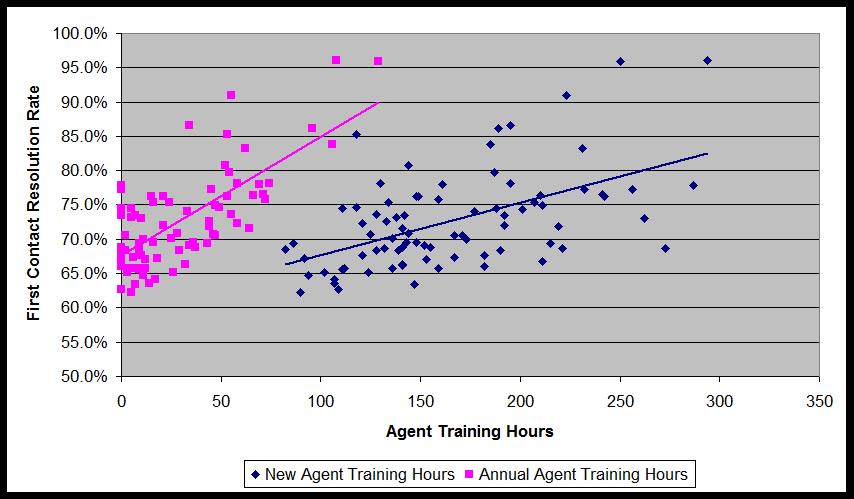
Agent training is one of the few metrics that a support organization has complete control over. Moreover, it is a preventive/proactive metric because higher training hours are positively correlated with several other important metrics on the service desk. For example, agent training is one of the key drivers of first contact resolution rate (Figure 1). And as we know from prior Metric of the Month articles, first contract resolution is the single biggest driver of customer satisfaction. This is why support organizations looking to improve their customer satisfaction scores will oftentimes increase their agent training hours in a bid to increase first contact resolution rates, which then drives higher customer satisfaction levels.
Figure 1: Agent Training Hours vs. First Contact Resolution Rate
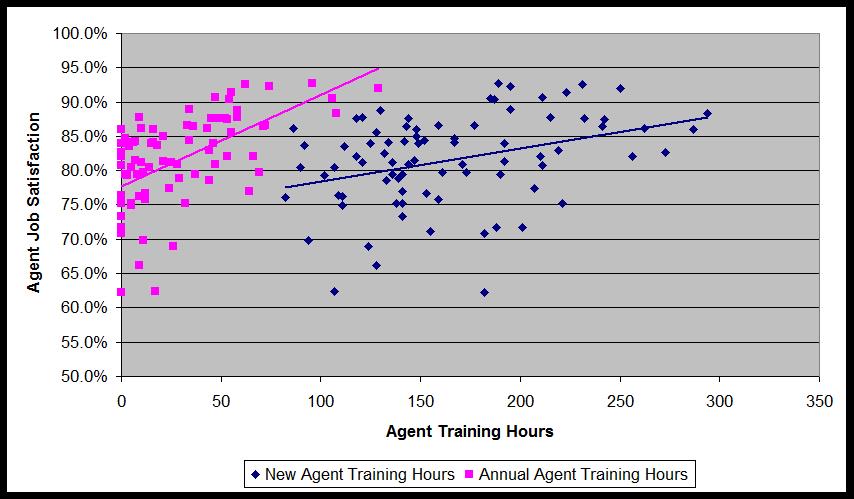
Training hours also have a direct impact on agent job satisfaction, and hence the overall morale of an organization (Figure 2). As many experienced service and support professionals can attest, maintaining good morale in the workforce can be a challenge. Clearly one of the benefits of providing agents with an abundance of training opportunities is that it can help to boost and sustain high levels of agent job satisfaction. This, in turn, has the effect of reducing agent turnover and absenteeism.
Figure 2: Agent Training Hours vs. Agent Job Satisfaction
Industry Benchmarks for Agent Training
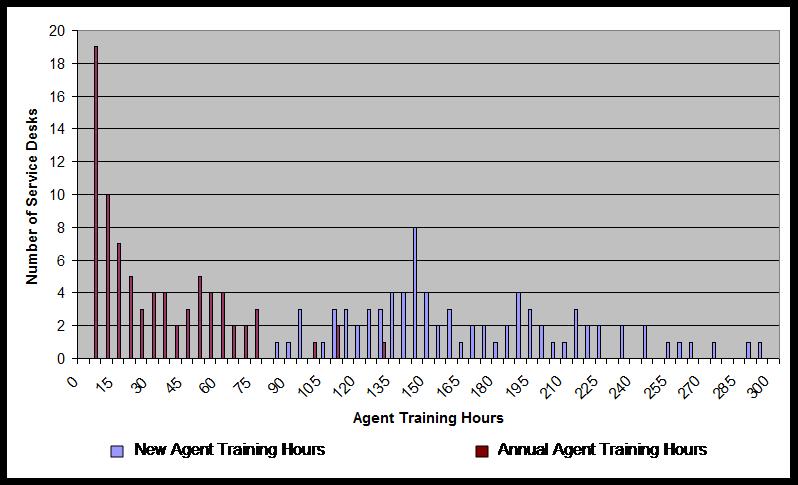
Agent training hours can vary dramatically from one organization to another, and from one industry to another. MetricNet’s global benchmarking database shows that the average new agent training is 165 hours (roughly four full weeks), and the average annual agent training is 29 hours. These metrics range widely, however, from a low of 82 hours to a high of 294 hours for new agent training, and from a low of 0 hours to a high of 129 hours for annual agent training (Figure 3). These large variations are a reflection of each company’s individual training philosophy, as well as budget and time constraints as mentioned above.
Figure 3: Industry Benchmarks for Agent Training Hours
Please join us for next month’s
Metric of the Month:
Metrics Roundup, where I will discuss key cause-and-effect relationships between the most important service desk KPI’s.
