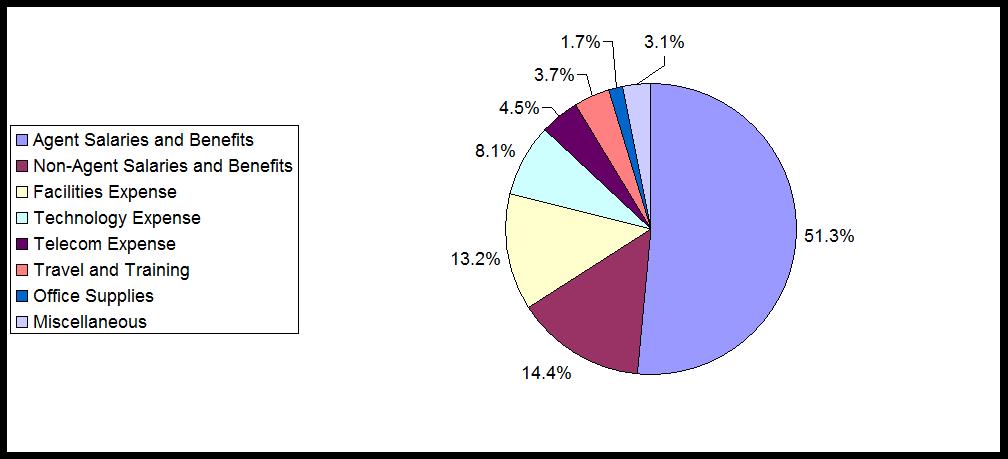
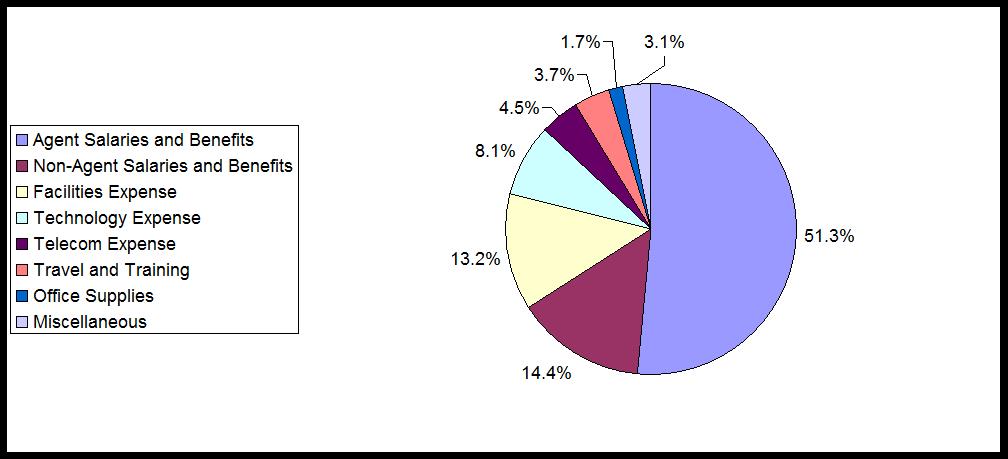
Figure 1: Expense Breakdown for Global Service Desks
The best measure of labor productivity is agent utilization. Because agent salaries and benefits represent more than half of all service desk costs, if agent utilization is high, the cost per contact will be correspondingly low. Conversely, when agent utilization is low, agent costs, and hence cost per contact, will be correspondingly high. This is illustrated in Figure 2 below.
Figure 2: Agent Utilization vs. Cost per Contact
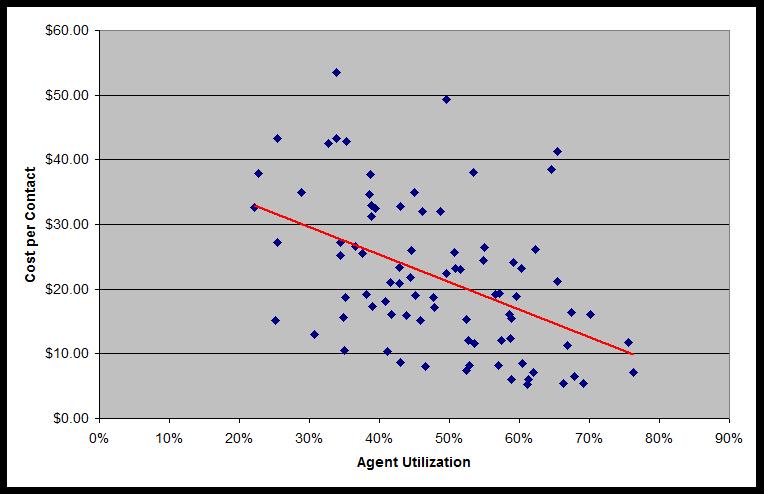
Just as world-class service desks are obsessive about maintaining high customer satisfaction levels, they are equally committed to keeping their costs in check. They do this primarily by maintaining tight control over agent utilization. This has the effect of minimizing cost per contact as illustrated above. That said, extremely high agent utilization rates can actually increase your costs by driving agent turnover rates higher. Whenever agent utilization rates approach 60% - 70 %, a service desk will experience relatively high agent turnover because they are pushing the agents too hard. Extremely high utilization leads to burnout, high turnover, and low morale in the service desk.
The formula for determining agent utilization is somewhat complicated. It factors in the hours in a work day, break times, vacation and sick days, training time and a number of other factors. But there is an easy way to approximate agent utilization without going to so much trouble:

Let’s say, for example that the agents in a particular service desk handle an average of 500 contacts per month at an average handle time of 10 minutes per contact. Additionally, these agents work an average of 21 days per month, and their work day is 7.5 hours after subtracting lunch and break times. The simplified utilization formula above would work out to the following:

Once again, this is not a perfect measure of agent utilization, but it is quick and easy, and gets you within 5% of the true agent utilization figure.
Benchmark Ranges for Agent Utilization
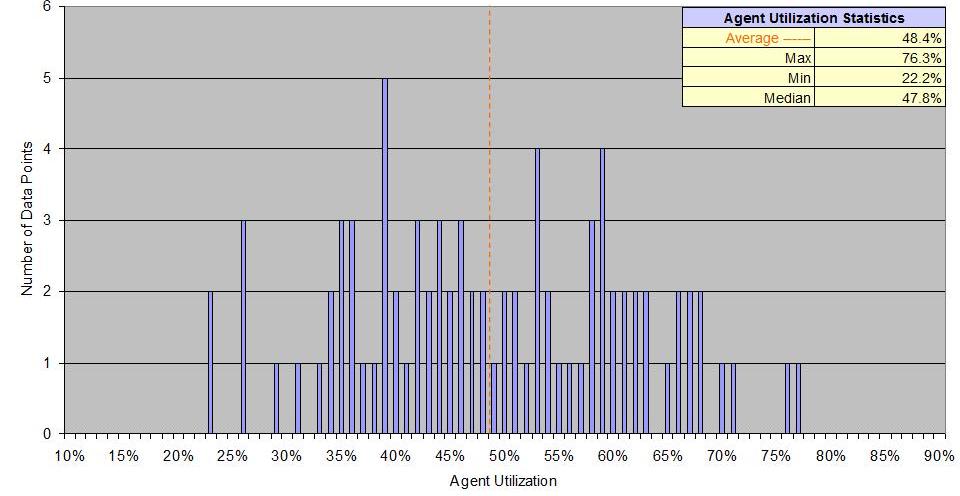
MetricNet’s benchmarking database shows that the average agent utilization for service desks worldwide is about 48%. This number varies widely, from a low of 22% to a high of 76%. Those at the low end of this range tend to be smaller service desks that are unable to achieve economies of scale, or service desks that are required to staff a back shift where few calls come in. Those at the high end of this range tend to be outsourcers who typically have good scale economies, and have a profit incentive to keep agent utilization rates on the high side.
Figure 3 below shows the distribution of agent utilization statistics for a representative cross-section of service desks worldwide.
Figure 3: Benchmarking Statistics for Agent Utilization
Please join us for next month’s
Metric of the Month:
Incidents per User per Month, an important service desk metric that is oftentimes misinterpreted.