Call Center Performance Best Practices


Call Center Best Practices: Part 1 Call Center Performance Cheat Sheet

By Jeff Rumburg Managing Partner

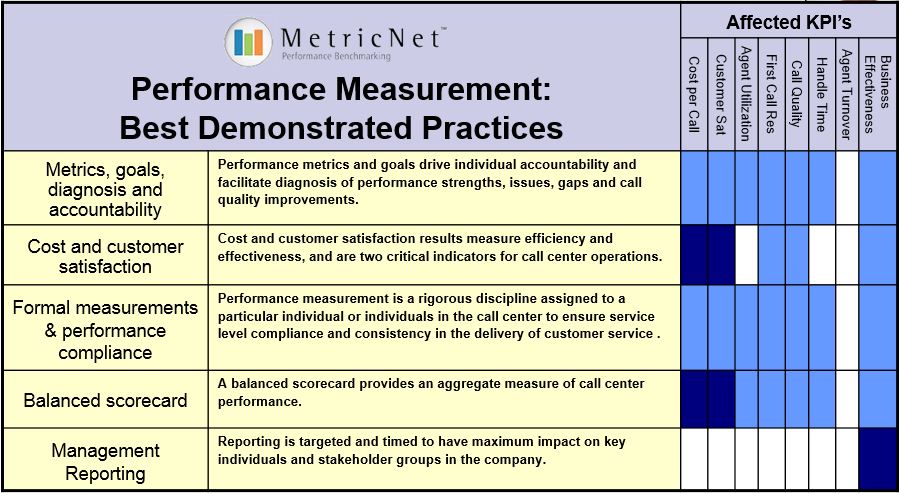
Performance measurement and management is the base building block for call center best practices followed by people, process and technology. No call center that has ever achieved World-Class performance did so without a strong performance measurement and management discipline. So we believe KPIs, specifically the discipline of performance measurement and management, is an even more fundamental building block than Human Resource management. We have developed a series of Call Center Performance Best Practices cheat sheets you can use to gain insight on what you need to do when you identify a performance gap in your call center. In the first of MetricNet's cheat sheet series we've lifted some of the more common best practices in Call Center Performance Measurement. Best demonstrated practices include metrics, goals, diagnoses and accountability, cost and customer satisfaction, formal measurements and performance compliance, call center balanced scorecard and management reporting. Cause-and-effect relationships are then measured by influence on KPIs such as cost per call, customer satisfaction, agent utilization, first call resolution, call quality, handle time, agent turnover and business effectiveness. Let's take a look at five best practices in more detail.
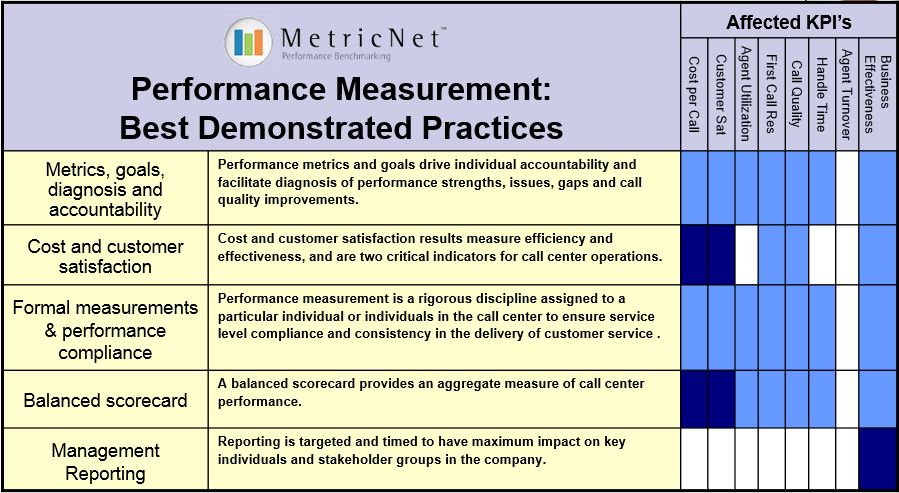
Download This Article Forward To A Friend 1. Performance metrics and goals drive individual accountability and facilitate diagnosis of performance strengths, issues, gaps and call quality improvements. This best practice has a minor influence on seven KPIs including cost per call, customer satisfaction, agent utilization, first call resolution, call quality, handle time and business effectiveness. It has little to no influence on agent turnover. 2. Cost and customer satisfaction results measure efficiency and effectiveness, and are two critical key performance indicators for call center operations. This best practice has a strong cause-and-effect relationship with cost per call and customer satisfaction. It has a minor influence on first call resolution, call quality and business effectiveness, but little to no influence on agent utilization, handle time or agent turnover. 3. Performance measurement is a rigorous discipline assigned to a particular individual or individuals in the call center to ensure service level compliance and consistency in the delivery of customer service. This best practice has a minor influence on cost per call, customer satisfaction, agent utilization, first call resolution, call quality and business effectiveness. It has little to no influence on agent turnover. 4. A call center balanced scorecard provides an aggregate measure of call center performance. This best practice has a strong cause-and-effect relationship with cost per call and customer satisfaction. It has a minor influence on agent utilization, first call resolution, call quality, handle time and business effectiveness, but little to no influence on agent turnover. 5. Management reporting is targeted and timed to have maximum impact on key individuals and stakeholder groups in the company. This best practice has a strong cause-and-effect relationship with business effectiveness and little to no influence on the others. Please join us next month for Best Practices in Call Center Human Resources. MetricNet Call Center Performance Measurement Best Practices If the cell is dark blue, it means that there is a strong cause and effect relationship between the KPI and the best practice. White cells indicate little to no cause-and-effect relationship and light blue indicates a minor influence. Download This Article Forward To A Friend